
How many restrooms does a race need?
Start with corral density, not total headcount. If 800 runners funnel through a start line in a 20-minute window, you need more units there than at mile 9 where people are spread out. OSHA 1926.51(c) sets construction ratios (one toilet per 20 workers under a crew of 20, scaling up from there), and while a road race isn't a construction site, race directors use the same logic: cluster units where people wait, thin them out where they don't. A standard porta potty rental works fine for most mile markers. Start and finish lines usually want a mix, including at least one ADA accessible porta potty per cluster, per ADA Standards 213.2, which requires 5 percent of clustered single-user units to be accessible with never fewer than one. If your course runs through Orange near Villa Park, about 5.1 miles northeast, or North Tustin, 5.4 miles southeast, we can stage units at satellite lots and roll them to your mile markers before gun time. Bigger races, especially ones with VIP tents or sponsor villages, often add a deluxe flushable porta potty near the finish for staff and honored guests. Not sure on the count? Our porta potty placement guide and the how many porta potties do I need breakdown both walk through corral math step by step, and a request a quote call gets you a number fast.
What else does a race site need besides toilets?
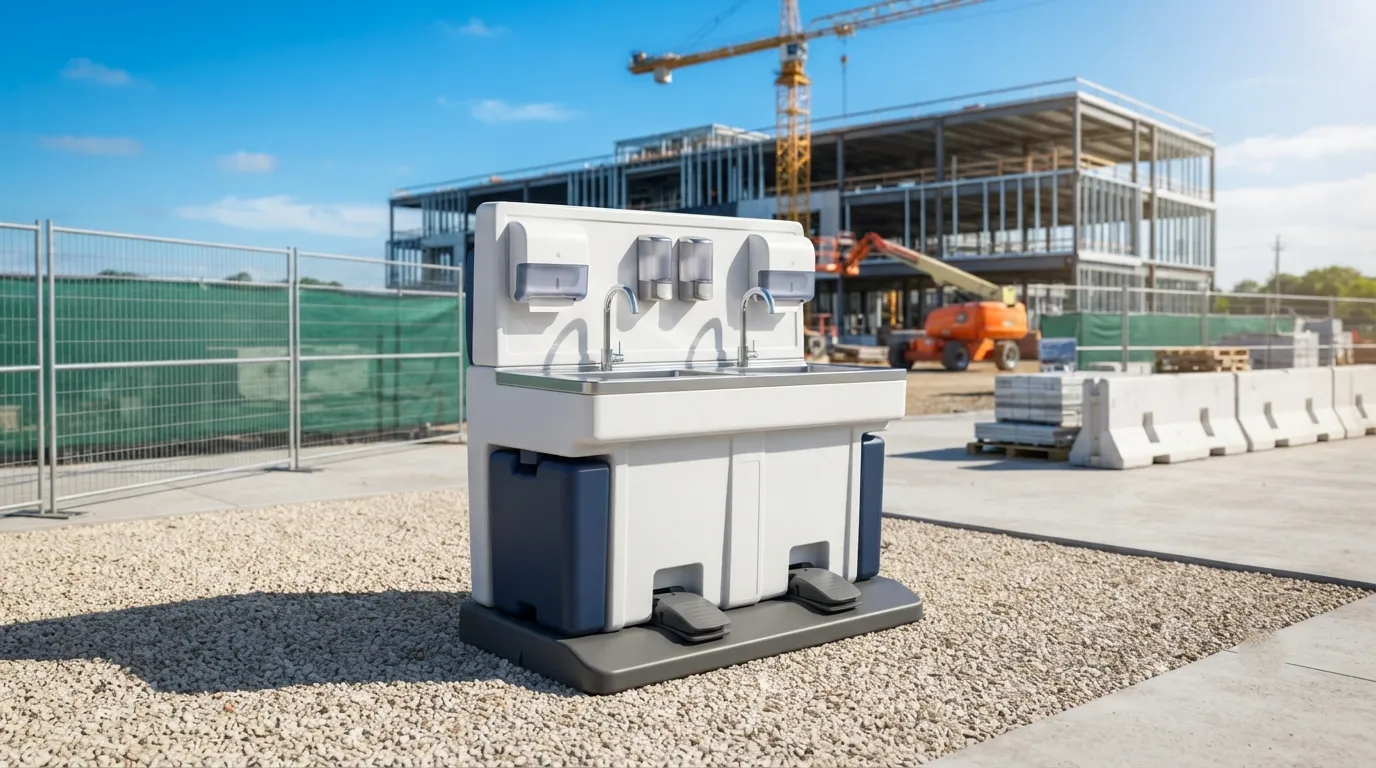
Toilets are half the job. Timing tents, medical stations and finish-line crews need power, and that means light towers or a generator tied to a temporary power pole if the course runs early or late. Knowing how to brace a temporary power pole matters here: set it on a stable, level pad, guy it with rated line at three or four points, and keep the base clear of runner traffic and cable crossings, since a pole that racks under wind or a stray elbow takes down timing gear with it. Pair the pole with a light tower rental for pre-dawn starts. Hydration and first aid crews also need water access; OSHA 1926.51(a)(1) calls for an adequate supply of potable water at any staffed worksite, and a handwashing station rental or portable sink rental covers medical tents and food vendors alike. Under 29 CFR 1910.141(d)(2), any handwashing setup needs actual soap and towels or a dryer, not just sanitizer, so budget for that when you order. If your course crosses private lots or fairgrounds, temporary fence rental or a crowd control barrier rental keeps spectators off the route and staging areas contained. Post-race cleanup usually needs a roll-off dumpster rental for cups, gel wrappers and banner material; a 10 or 20 yarder handles most 5K to half-marathon volumes, and our dumpster sizes and dimensions page sorts out which one fits your footprint.
Where should restrooms sit on the course?
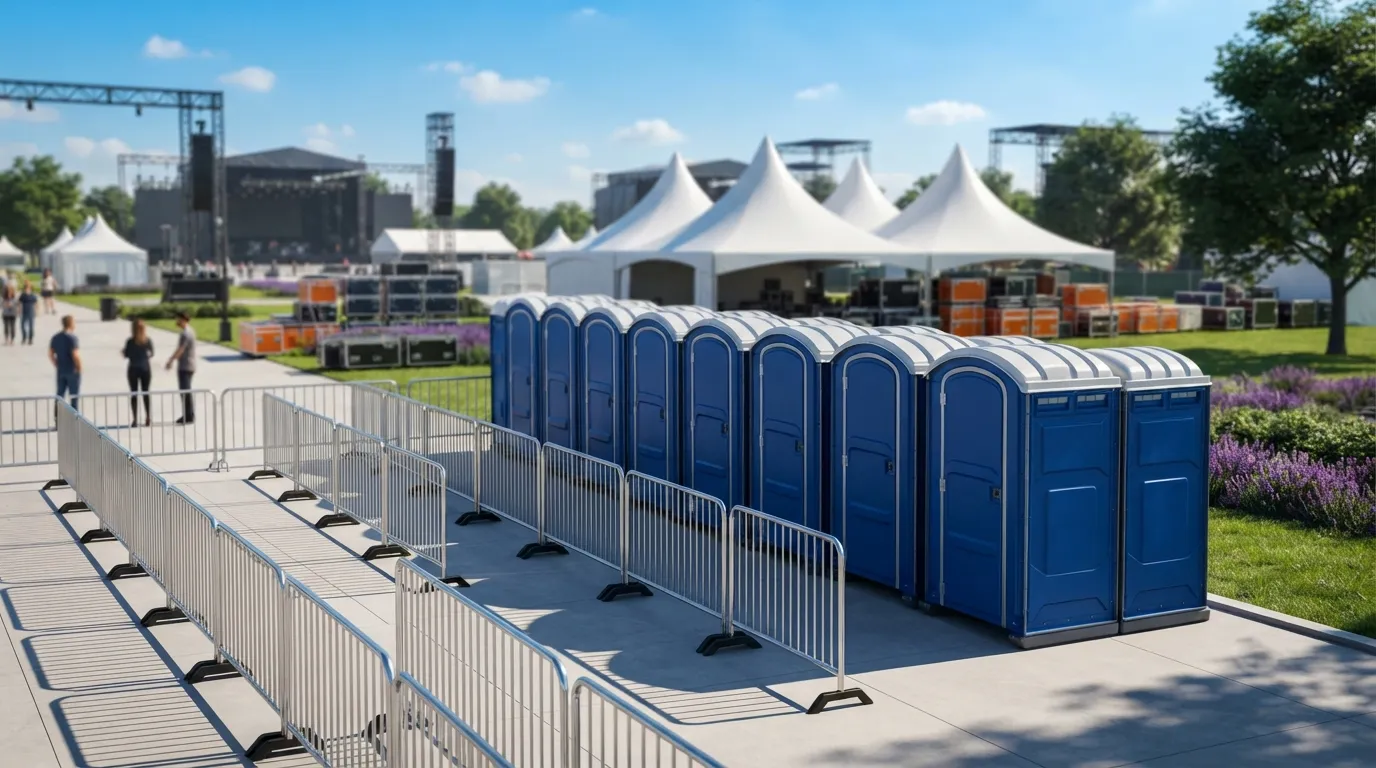
Place them where runners already stop: water stations, medical tents, the finish chute, and any spot with a natural bottleneck. A unit set 30 feet off the running lane, on flat, stable ground, keeps ADA Standards 302.1's stable-surface requirement satisfied and avoids the mud problem that shows up on trail courses after rain. Access matters too. ADA Standards 403.5.1 calls for a 36-inch clear path to any accessible unit, and 404.2.3 sets the minimum door opening at 32 inches, so don't box a unit in behind barricades or bike racks. For races that finish in downtown Orange near city venues, curb space is tight, so we scout drop points in advance. If your course also touches Placentia, about 8.7 miles north, we can split a delivery run between both ends of the route on race morning. Multi-day events or festival tie-ins sometimes need a full restroom trailer rental, especially if there's a beer garden or VIP section after the finish; a 2 stall restroom trailer handles smaller crowds, while an 8 stall restroom trailer fits big finish festivals. Compare that against standalone units on our festival restroom rental and concert restroom rental pages, which cover similar crowd-flow math.
Frequently asked questions
How far in advance should I book race restrooms?
Book as soon as your course map is set, ideally 60 to 90 days out for anything over 1,000 runners. Popular race weekends fill delivery slots fast. Smaller local 5Ks in Orange can often work with two to three weeks notice, but confirm early if your date overlaps another event nearby.
Do I need permits for restrooms placed on public streets?
Placement in the public right of way needs confirming with the City of Orange directly; we don't have a citywide permit rule to quote here. Check our porta potty permit requirements page, and we're glad to coordinate delivery timing around whatever the city requires.
Can you deliver to multiple points along one course?
Yes. Races that span several miles usually need drops at the start, one or two mid-course points, and the finish. We plan routes around Orange traffic patterns and stage extra units near medical tents in case of last-minute crowd shifts.
What happens if it rains on race day?
Units stay functional in wet weather since tanks and structure don't depend on dry ground, but approach mats matter more. We recommend extra ground protection near entrances so ADA Standards 302.1's slip-resistant surface requirement still holds up in mud or standing water.
How do you handle cleanup after the race?
Crews sweep the course for units within a few hours of the final finisher, and pair pickup with a roll-off dumpster rental sweep for trash and banners. For county-fair-style expos after the race, see county fair restrooms for combined event planning.
Next step
Get a delivery date
Tell us the address, the dates and the headcount. We size the order and confirm the route.