
How many porta potties do I need for a construction site?
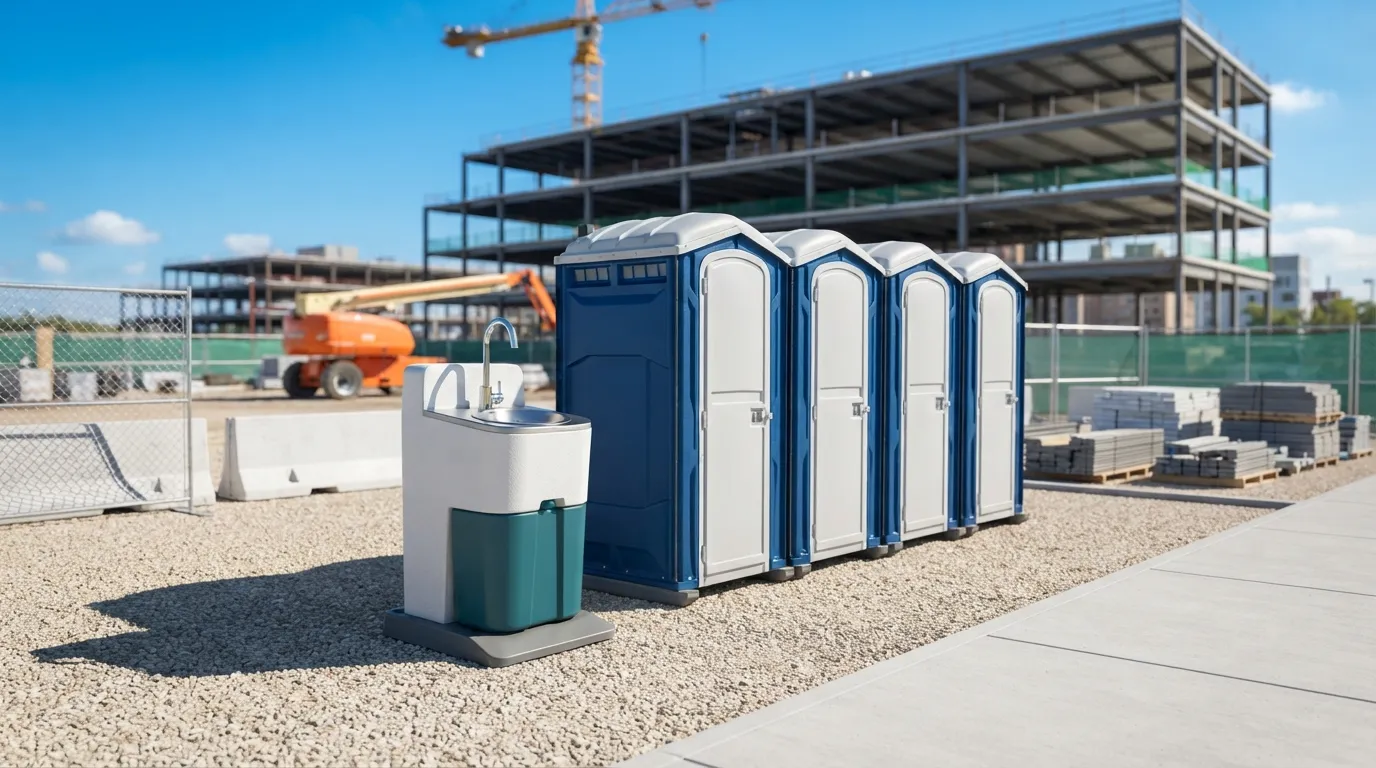
OSHA 1926.51(c) sets the baseline: 1 toilet seat for 20 workers or fewer, then 1 seat and 1 urinal per 40 workers once you pass 20, and 1 seat and 1 urinal per 50 workers once you hit 200 or more. A 15-person framing crew needs one unit. A 60-person site needs two seats and two urinals, minimum, and most GCs round up rather than run tight. Multi-week jobs usually order standard porta potty rental units on a monthly porta potty rental plan, since a standard unit runs in the 125 to 325 dollar range per month depending on service frequency. If the crew includes anyone using a wheelchair or has mobility restrictions, ADA Standards section 213.2 requires at least 5 percent of clustered units to be accessible, never fewer than one. Check ADA accessible porta potty options before the crew mobilizes, not after someone complains.
How many porta potties do I need for an event?
| Guests | Duration | Standard units | Notes |
|---|---|---|---|
| 50-100 | 4 hours | 2 | add 1 if serving alcohol |
| 100-200 | 4 hours | 3-4 | add 1-2 if serving alcohol |
| 200-300 | 4 hours | 5-6 | add 2 for alcohol or 6+ hours |
| 300-500 | 4 hours | 7-10 | consider a restroom trailer rental |
These numbers assume a 4 hour window. Add roughly 10 percent more capacity per additional 2 hours, and add another unit for every 100 guests if alcohol is being served, since drinking events run through units faster than a dry gathering ever will. A wedding at a venue in Orange with 150 guests and an open bar for 6 hours should book 5 units, not 3. Multi-day festivals need daily servicing built into the quote, not a single drop and pickup. For weekend events, a standard unit runs 125 to 400 dollars for the weekend block, and porta potty rental cost breaks down how that scales with headcount.
What OSHA rule governs toilet count on a jobsite?
OSHA 1926.51(c)(1) is the construction standard, and it scales in three brackets: 20 workers or fewer gets 1 facility, 20 to 199 workers gets 1 seat and 1 urinal per 40, and 200 or more gets 1 seat and 1 urinal per 50. That's the whole table. It doesn't care about trade, shift length or whether the job is indoors or out. General industry workplaces (not construction) fall under 1910.141(c)(1)(i) instead, which uses a different ratio. If your crew is applying paints, coatings, herbicides or insecticides, 1926.51(f)(1) also kicks in and requires washing facilities beyond just a toilet, so pair your order with a handwashing station rental rather than assuming hand sanitizer covers it. Full detail lives on OSHA portable toilet requirements.
How do I count units for a multi-day festival?
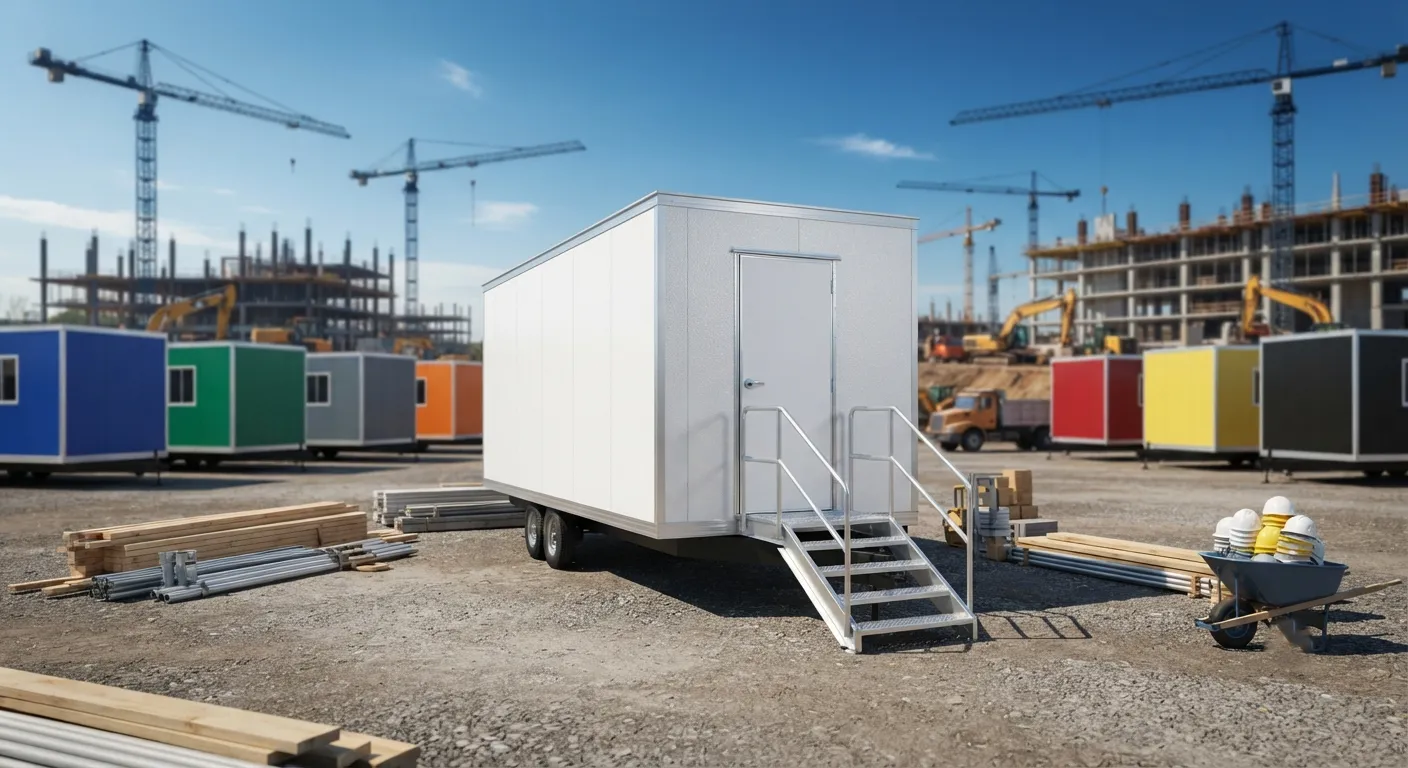
Multiply your 4 hour headcount ratio by the number of peak hours per day, then hold that number steady across every day of the run rather than dropping units on lighter days. A 3 day festival pulling 400 people per day at peak needs the same 7 to 10 units on day one as day three, plus a servicing plan since ANSI/PSAI Z4.3 sets a baseline of one service visit per week for up to 10 users over a 40 hour week, and a festival blows past that fast. Multi-day events also need overnight security thinking around units, since temporary fence rental around a restroom bank cuts down on off-hours misuse. Budget servicing into your quote up front. A festival that orders units but skips extra servicing runs out of clean capacity by the second afternoon, and that's the complaint that sinks a repeat booking.
Does serving alcohol change how many units I need?
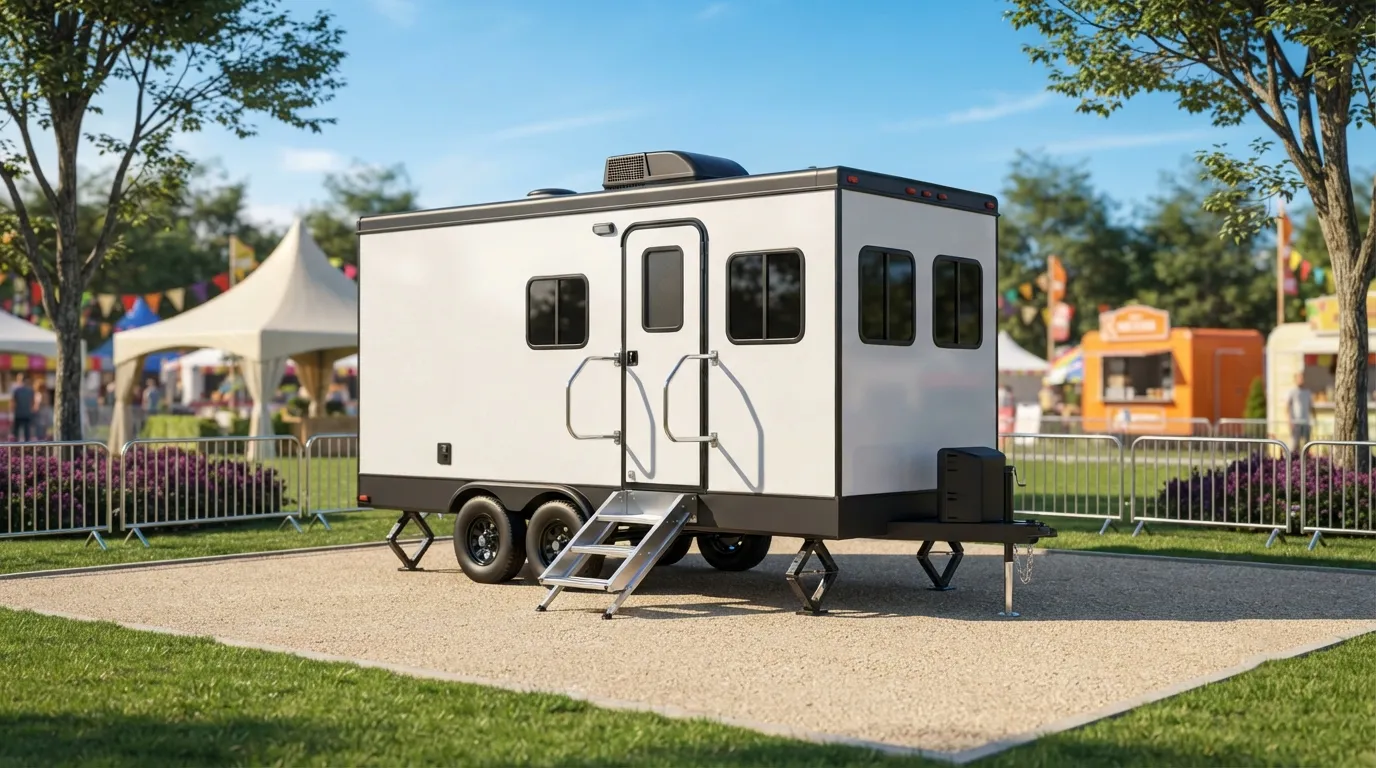
Yes. Alcohol increases bathroom trips and slows down turnover per unit, so add roughly 1 extra unit per 100 guests beyond your dry-event baseline. A 200 guest wedding with a full bar for 5 hours should book 6 units instead of the 4 you'd use for a daytime ceremony with no bar. Longer pours mean longer lines, and long lines are the single fastest way to sour guest reviews of an otherwise good event. If the event runs past dark, pair units with a light tower rental so guests aren't navigating a gravel lot by phone flashlight. For upscale events, a deluxe flushable porta potty or a small restroom trailer rental handles higher per-unit traffic better than a basic unit under sustained alcohol-driven use.
What size dumpster pairs with a big renovation or event cleanup?
Dumpster sizing runs by cubic yards, and each size covers a real range of debris volume. A 10 yard dumpster measures roughly 12 feet long, answering how many feet is a 10 yard dumpster, and holds around 10 cubic yards, or about 270 cubic feet, answering how many cubic feet in a 10 yard dumpster, suited to a single-room renovation. A 20 yard dumpster runs about 22 feet in overall footprint and holds roughly 20 cubic yards, or about 540 cubic feet, and typically carries 2 to 3 tons of debris depending on material, which answers how many tons does a 20 yard dumpster hold for most residential cleanouts. A 30 yard dumpster holds around 30 cubic yards and can carry up to roughly 4 to 5 tons on denser loads, which is the answer most people are after when they ask how many tons can a 30 yard dumpster hold. A 40 yard dumpster holds around 40 cubic yards, close to 1,080 cubic feet (the figure behind how many cubic feet in a 40 yard dumpster), and can carry 4 to 6 tons depending on what's inside it, which is also the answer to how many tons does a 40 yard dumpster hold. Dumpster day rates run 51 to 112 dollars, with weekly rentals in the 426 to 778 dollar band. Full breakdowns for each size sit on 10 yard dumpster rental, 20 yard dumpster rental, 30 yard dumpster rental and 40 yard dumpster rental, and dumpster sizes and dimensions lays out the footprint math if you're tight on driveway space. A roll-off truck needs about 60 feet of straight clearance behind it to drop the container, so measure your driveway or lot before you order.
Where do I put units on a tight Orange lot?
Placement matters as much as count. Units need a stable, level surface under ADA Standards section 302.1, and any accessible unit needs a 60 inch turning circle per ADA Standards section 304.3.1 plus a 32 inch clear door opening per ADA Standards section 404.2.3. A standard unit measures about 44 by 48 inches on the ground and stands roughly 92 inches tall, so tuck it somewhere the service truck can still reach on pump day. If your Orange site backs onto a shared alley or a narrow lot near a residential block, walk the delivery path before committing, since a 60 foot straight clearance behind a roll-off truck is a hard requirement for dumpster drops too. Villa Park sits about 5.1 miles northeast of Orange and North Tustin about 5.4 miles southeast, and both share the same tight-lot layouts that make a placement walkthrough worth the ten minutes. See porta potty placement guide for the full rundown, and porta potty permit requirements if the unit sits in a right of way, since placement in a public right of way needs confirming with the City of Orange directly rather than assumed.
Orange Porta Pros services jobsites and events across Orange and out toward Placentia, roughly 8.7 miles north, with same-week delivery on most standard orders. Whether you're counting seats for a crew of 40 or units for a 300 person fairground event, how many porta potties do i need planning starts with an accurate headcount, not a guess. Request a walkthrough through request a quote and we'll size the order before it ships.
How many porta potties do I need for 100 guests?
Plan on 2 to 3 standard units for 100 guests over a 4 hour event, more if alcohol is served. A dry daytime gathering can run on 2 units comfortably. Add a third if the event runs past 4 hours or includes a bar, since drink service pushes trip frequency up fast.
How many porta potties do I need per person on a jobsite?
OSHA 1926.51(c) doesn't quote a per-person ratio directly, it uses brackets: 1 toilet for 20 workers or fewer, then 1 seat and 1 urinal per 40 workers up to 200. A 35-person crew needs 2 seats and urinals, not 1, since it crosses the 20 threshold.
Do I need an ADA unit even for a small crew?
Yes, if anyone on site or attending the event needs one. ADA Standards section 213.2 requires at least 1 accessible unit whenever units are clustered, regardless of total headcount. A single ADA unit satisfies a small crew; larger clusters need 5 percent accessible minimum.
How many cubic feet in a 20 yard dumpster?
A 20 yard dumpster holds around 540 cubic feet, translating to roughly 20 cubic yards of debris capacity. That's enough for a mid-size renovation, a roof tear-off, or a two to three room cleanout, depending on how dense the material is.
How many tons does a 30 yard dumpster hold?
A 30 yard dumpster typically carries up to roughly 4 to 5 tons, depending on what's inside. Construction debris like concrete or shingles weighs more per cubic yard than household junk, so weight limits vary more than volume does on denser loads.
What happens if I underestimate my unit count?
Lines form, units fill faster than they're serviced, and guests or workers start looking for alternatives, which isn't a good look at any site. It's cheaper to order one extra standard unit, priced around 100 to 350 dollars per day, than to run short mid-event.
Next step
Get a delivery date
Tell us the address, the dates and the headcount. We size the order and confirm the route.