
What Does OSHA Require for Farm Worker Sanitation?
OSHA 1928.110 covers field sanitation for hand-labor agricultural work. It calls for potable water, toilet facilities and handwashing at a rate of one facility per 20 employees, and none of it can sit farther than a quarter mile from where people are working. That is different from a construction site, where OSHA Portable Toilet Requirements in Orange, CA applies the 1926.51(c) ratio instead for general sanitation. If a crew splits across two fields a half mile apart, you need coverage at both, not one bank of units in the middle. Orange Porta Pros maps out placement before delivery so nobody is walking a quarter mile in July heat to find a toilet.
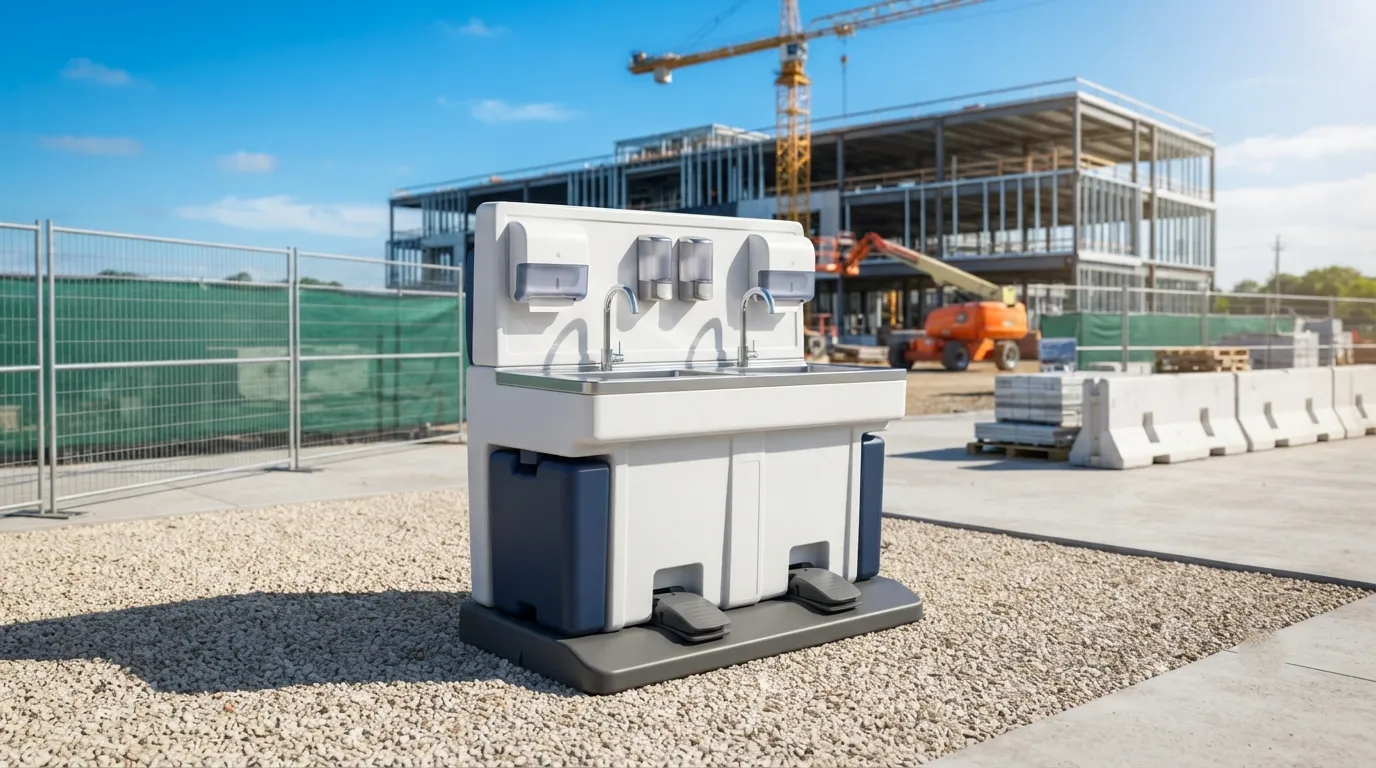
Handwashing is a separate line item from the toilet count. Under 29 CFR 1910.141(d)(2), a handwashing setup needs soap and a way to dry hands, and a bottle of sanitizer does not satisfy that. We rent handwashing station rental units and portable sink rental setups sized for crew counts, and we can talk you through the difference on our handwashing requirements page. Growers running seasonal harvest with 40 to 60 workers usually pair a couple of standard porta potty rental units with one or two hand stations, spaced so no one hikes across a field to wash up before lunch.
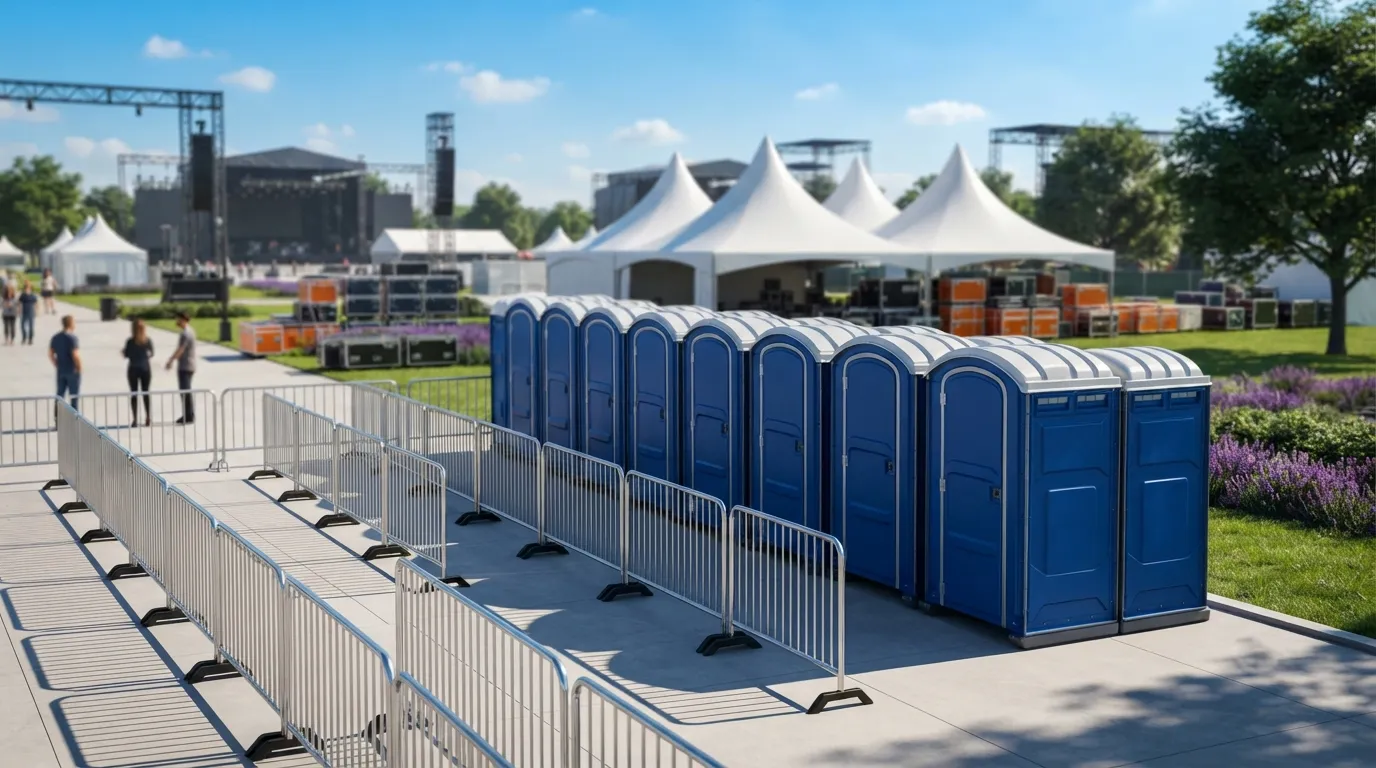
A standard unit holds a 60 to 70 gallon tank and stands about 92 inches tall, footprint roughly 44 by 48 inches. That is small enough to sit at a field edge without eating into planted rows. If your operation needs a wheelchair-accessible unit for an office worker or a visiting inspector, ADA Standards 213.2 requires at least one accessible unit in any cluster, even a small one. We carry those through our ADA accessible porta potty line.
How Many Restrooms Does a Farm or Ranch Need?
Run the math on OSHA 1928.110's one-per-20 ratio first, then add distance. A 45-person harvest crew needs at least three units, and if the crew works two fields more than a quarter mile apart, you need units at each location, not just three units in one spot. Ranches with a small year-round staff but seasonal spikes during planting or harvest often keep one unit on a monthly rate and add more for the busy weeks. Use our how many porta potties do i need guide to run your own numbers, or request a quote and we will do it for you.
Distance also affects delivery. Orange Porta Pros serves growers and ranch operations around Orange, and we already know the drive to nearby communities: Villa Park sits 5.1 miles northeast, North Tustin is 5.4 miles southeast, and Placentia is 8.7 miles north. If your acreage runs along the edge of one of those areas, factor that into how far units need to travel from the road to the actual work site, since a roll-off or restroom trailer delivery needs about 60 feet of straight clearance behind the truck.
Packing sheds and processing areas sometimes need more than toilets. If your crew is applying herbicides or insecticides near a work area, OSHA 1926.51(f)(1) requires washing facilities specifically for employees applying paints, coatings, herbicides or insecticides, or handling other harmful contaminants. That is a narrower rule than general handwashing under 1926.51(c), but it is a real one if your crew is spraying. Pair a hand station with your portable restroom rental order to cover both the general sanitation ratio and the pesticide-handling rule in one delivery.
What Else Does an Ag Site Usually Need?
Toilets are rarely the only thing on a working farm site. Grease interceptors on a farm kitchen or packing house get pumped once fats, oils, grease and solids reach 25 percent of the liquid depth, which our grease trap pumping crew checks on schedule. A homestead septic tank typically needs pumping every 3 to 5 years depending on tank size and household size, and we cover that through septic pumping service and septic tank cleaning. If you are not sure where your tank stands, our septic tank warning signs page walks through what to watch for.
Bigger operations often need a roll-off dumpster rental for crop waste, packaging or fencing debris, plus temporary fence rental around equipment yards or chemical storage. Seasonal labor housing sometimes calls for a restroom trailer rental instead of standard units, especially if workers are on-site overnight. For farms without reliable well pressure, a holding tank rental covers potable water needs alongside sanitation, satisfying the water supply piece of OSHA 1926.51(a)(1) on sites where that rule applies. Orange Porta Pros can bundle any combination of these for one seasonal delivery window.
How much does a farm restroom rental cost?
A standard unit typically runs $200 to $325 a month, depending on service frequency and distance from Orange. Multi-unit harvest orders often get better per-unit rates. Check Monthly Porta Potty Rental in Orange, CA for the full breakdown before you commit to a season-long contract.
How often are farm porta potties serviced?
The baseline is one service visit a week for up to 10 users over a 40-hour week, per ANSI/PSAI Z4.3. Larger crews or hot months usually need two visits weekly. Ask about our seasonal service schedule when you request a quote.
Can I rent just a handwashing station without a toilet?
Yes. Some ag sites already have toilets but need handwashing to meet 29 CFR 1910.141(d)(2) or the pesticide-handling rule under 1926.51(f)(1) when herbicides or insecticides are in use. We rent hand stations standalone, sized by crew count.
Do I need an accessible unit on a small farm crew?
If you cluster portable toilets, ADA Standards 213.2 requires at least one accessible unit, even in a small group. Talk to us about which of your units should be the accessible one.
How far in advance should I book for harvest season?
Book 2 to 3 weeks ahead if possible. Harvest season gets busy fast, and last-minute orders sometimes mean longer waits for placement across multiple fields.
Next step
Get a delivery date
Tell us the address, the dates and the headcount. We size the order and confirm the route.