
Where should a porta potty go on site?
Flat ground first. ADA Standards section 302.1 calls for surfaces that are stable, firm and slip resistant, and that rule applies whether you're placing a standard porta potty rental or an ADA accessible porta potty. Skip slopes, mulch beds and soft turf that shifts after rain. Keep the unit within reach of a service truck; our crews need clear access for the pump hose, so a driveway or curb line beats a tucked-away corner. For jobsites, OSHA 1926.51(c) sets toilet counts by crew size, and placement has to keep that count usable, not just present. If you're planning for a whole crew, start with how many porta potties do i need before you pick a spot. Avoid placing units under low branches or near overhead lines, and keep porta potty placement rules like these in mind even for small residential jobs. On event grounds, think about sightlines too, nobody wants a unit facing the guest tables. For weddings and festivals, check the event restroom rental or wedding restroom rental pages for layout tips specific to those crowds. In Orange, that often means working around narrow side yards or shared driveways, so measure twice before the truck shows up.
Do I need a permit for porta potty or dumpster placement?
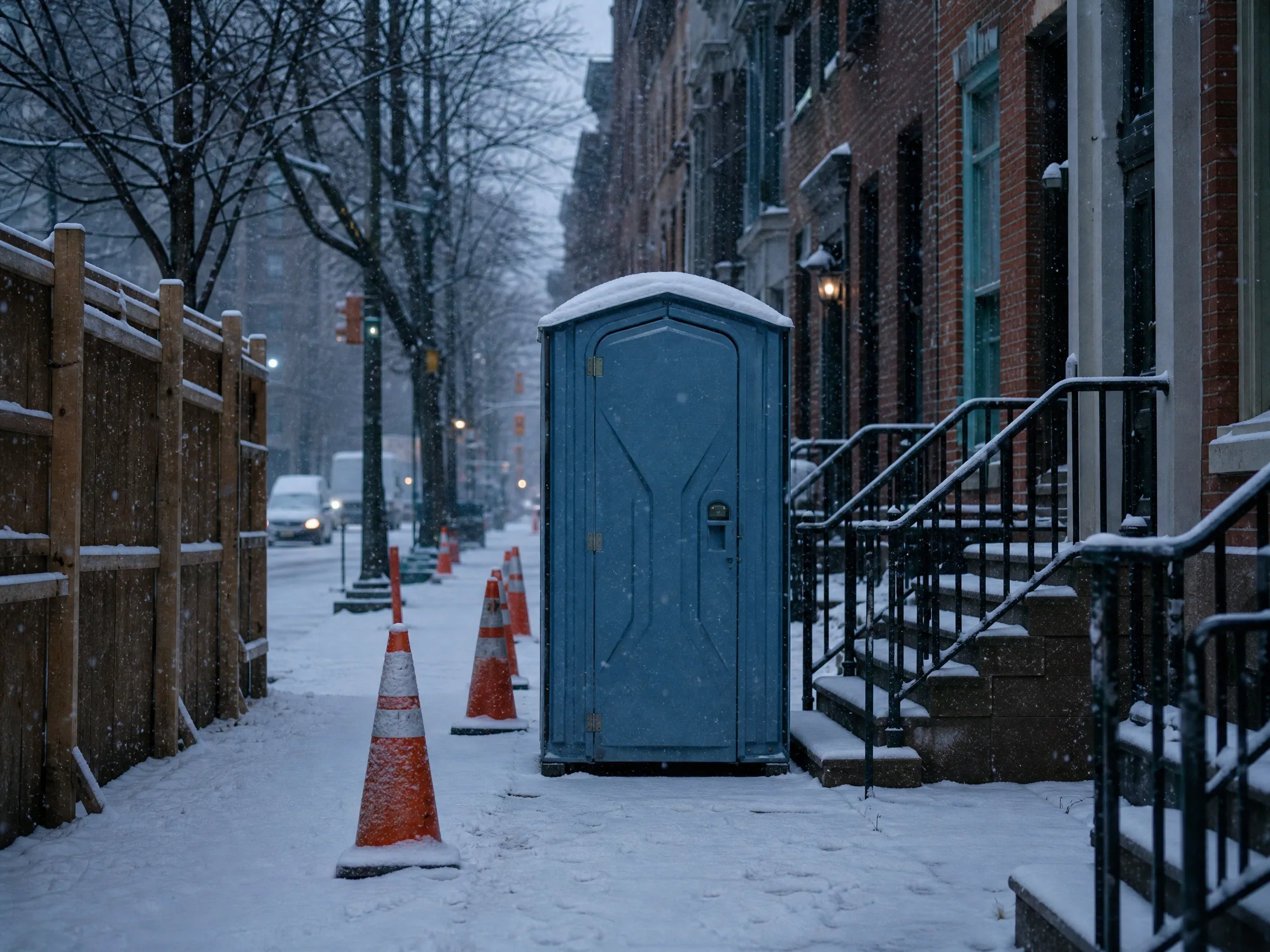
Sometimes, and it depends on where the unit sits. Placement in the public right of way, meaning the street, sidewalk or curb strip, needs confirming with the City of Orange before delivery. The same holds for dumpster placement permit questions: a dumpster placement permit cost and requirement varies by street versus private lot, so check with the city rather than guessing. We cover the general question on porta potty permit requirements and the dumpster side on dumpster permit requirements. If your project also needs a bin, our roll-off dumpster rental team can tell you what clearance the truck needs before drop-off; a roll-off delivery needs about 60 feet of straight clearance behind the truck, which matters as much as the permit itself. Private driveways and job sites usually move faster, but confirm before you commit to a layout, especially if the unit or bin will sit near a public curb for more than a day or two.
How much clearance does a porta potty need?
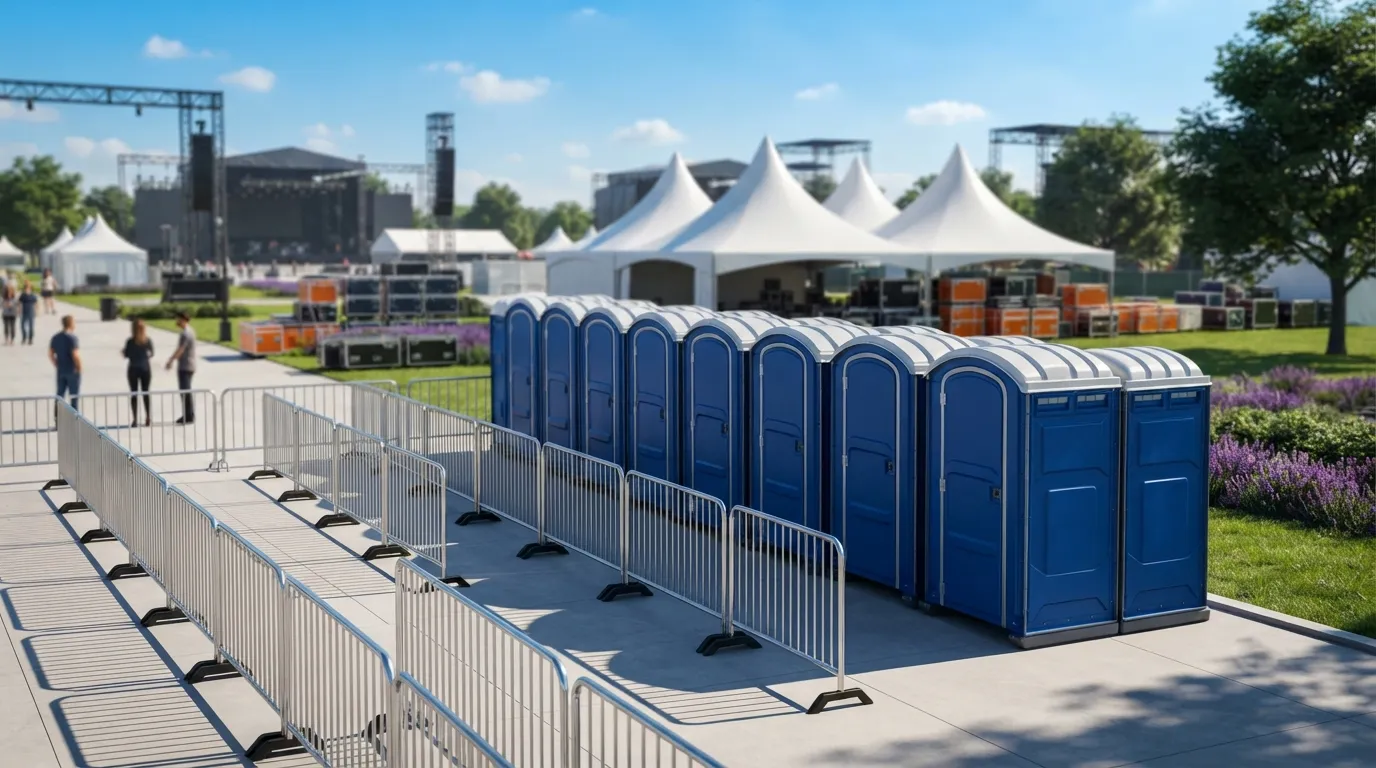
Plan for real door swing and truck access, not just floor space. A standard unit runs about 44 by 48 inches on the ground and stands roughly 92 inches tall, so give it a few extra feet on all sides for the door to open fully and for cleaning crews to work. ADA Standards section 404.2.3 sets minimum clear door opening width at 32 inches, and section 403.5.1 calls for a 36 inch clear route to reach it, so keep the path to any accessible unit free of hoses, cords and parked equipment. Where units are clustered, ADA Standards section 213.2 requires at least 5 percent of them to be accessible, never fewer than one. For servicing, ANSI/PSAI Z4.3 sets a baseline of one visit per week for up to 10 users over a 40 hour week, which is one more reason to leave the truck a clear lane. If you're weighing a deluxe flushable porta potty or a full restroom trailer rental, clearance needs grow with the unit, so measure the approach before delivery day.
Can porta potties be placed near septic or storm drains?
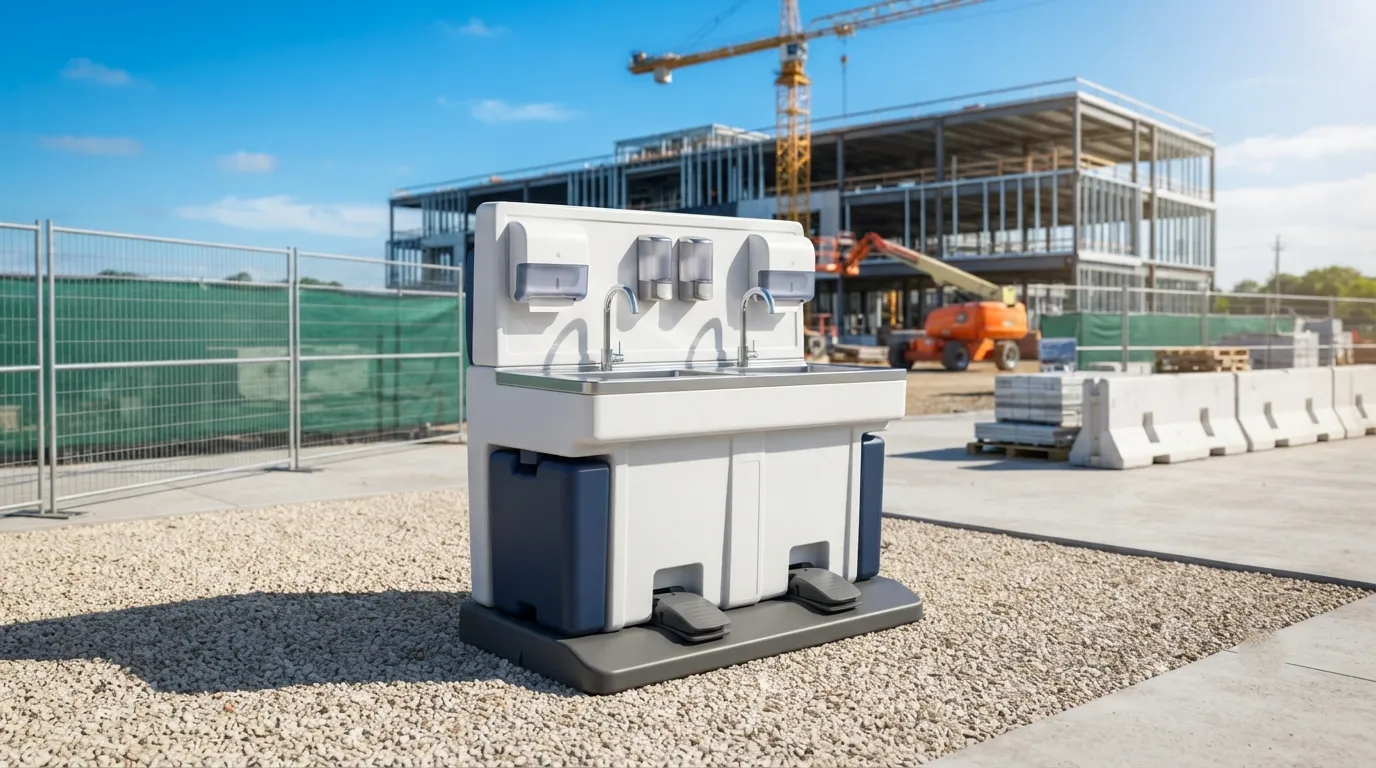
Keep distance from both. Storm drains carry runoff straight to the watershed, so units and dumpsters need to sit away from grates and low points where water pools. If your property runs on a septic system, know that a typical 1,000 gallon residential tank gets pumped every 3 to 5 years depending on tank size and household load, and heavy equipment or a parked unit sitting over the tank or leach field can cause damage. Check septic tank warning signs before you stage anything nearby, and if service is overdue, our septic pumping service crew handles that separately from portable sanitation work, alongside handwashing setups like an ozark river portable sink replacement parts unit when a station needs a fix rather than a full swap. Restaurants and food trailers should also think about grease: a grease interceptor gets pumped once fats, oils, grease and solids hit 25 percent of the liquid depth, which our grease trap pumping team tracks so you don't have to, the same way a placerville septic pumping service crew would track it on a system outside our usual routes. None of this is unique to Orange, but our crews route around the same storm drain and slope issues on jobs from Villa Park, 5.1 miles northeast, to Placentia, 8.7 miles north.
FAQ
Does Orange Porta Pros handle placement for events and job sites both?
Yes. We place units for construction crews, weddings, festivals and backyard projects alike. Job sites lean on OSHA 1926.51(c) for toilet counts, while events focus more on guest flow and sightlines. Either way, our delivery crew walks the site first, checking ground stability and truck access before dropping anything.
What if my site has no flat ground?
We bring leveling boards or reposition to the nearest stable spot, often a driveway apron or compacted gravel pad. ADA Standards section 302.1 requires firm, stable, slip resistant ground for accessible units specifically, so that spot usually gets first priority on tighter Orange lots.
Can I place a storage container or mobile office trailer in place of a fence line?
Usually, if the ground holds the weight and access stays clear for delivery and pickup. Check storage container rental for footprint details. If a trailer door ever needs replacing, that's a separate repair conversation, not something placement alone solves; mobile office trailer replacement doors are a maintenance item we track apart from where the unit sits.
How far from the house should a septic-area unit sit?
Far enough to avoid the tank and leach field entirely, since equipment weight can crack lines. If you're not sure where those run, a septic tech can flag it before we deliver. This applies to standalone units and to any trailer parked for a home renovation.
Do I need a permit for a short weekend rental?
Often not, if the unit stays on private property away from the curb. Street placement is the trigger for that right-of-way check with the City of Orange. When in doubt, ask before delivery day rather than after the truck's already there.
Next step
Get a delivery date
Tell us the address, the dates and the headcount. We size the order and confirm the route.